Domain-Driven Design in .NET Articles, Tutorials & News
Domain-Driven Design in .NET articles, tutorials, and news from the DotNetNews archive.
82 articles Updated
Start here
Editor picks for Domain-Driven Design
-
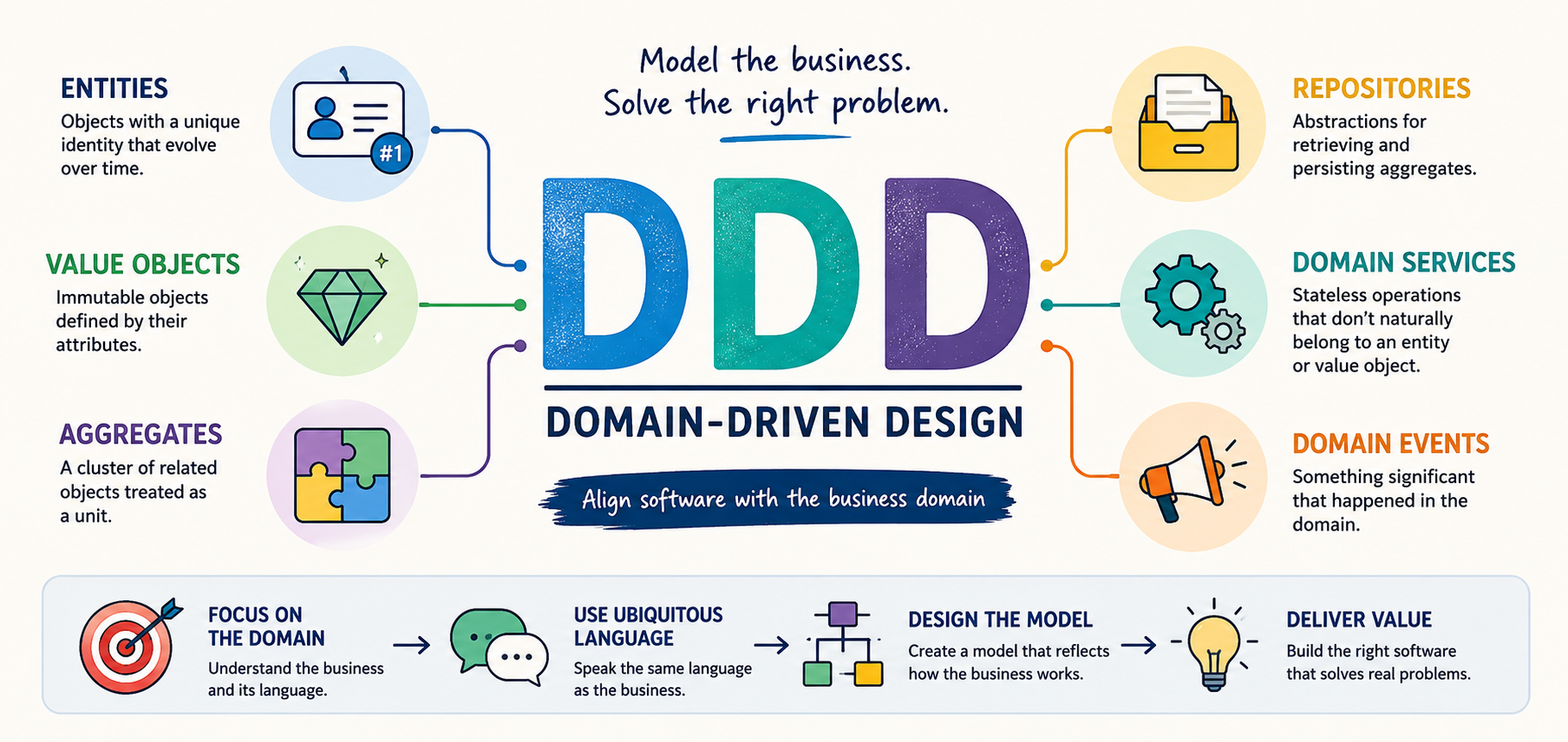
Domain-Driven Design (DDD)
medium.com Issue #497
Broad DDD material, but still useful for readers trying to separate strategic design ideas from framework details.
-

Understanding Domain-Driven Design (DDD) in .NET
medium.com Issue #394
DDD explanations are easy to overcomplicate; this one keeps the focus on modeling the domain.
-

Aggregates in DDD: Model Rules, Not Relationships
codeopinion.com Issue #350
A good DDD follow-up that pushes beyond entity relationships and back toward domain rules.
-

ASP.NET Core Architecture Patterns: CQRS, DDD, Clean Architecture Mastery (Part -19 of 40)
c-sharpcorner.com Issue #313
A broad architecture refresher with CQRS, DDD, and Clean Architecture.
-
From Anemic Models to Behavior-Driven Models: A Practical DDD Refactor in C#
milanjovanovic.tech Issue #194
This DDD refactor is the most concrete domain-modeling piece in the issue and shows behavior beating anemic entities.
-

Event Sourcing vs CRUD Applications: A Practical Comparison
c-sharpcorner.com Issue #499
Always worth reading these comparisons when they stay practical instead of ideological.
-
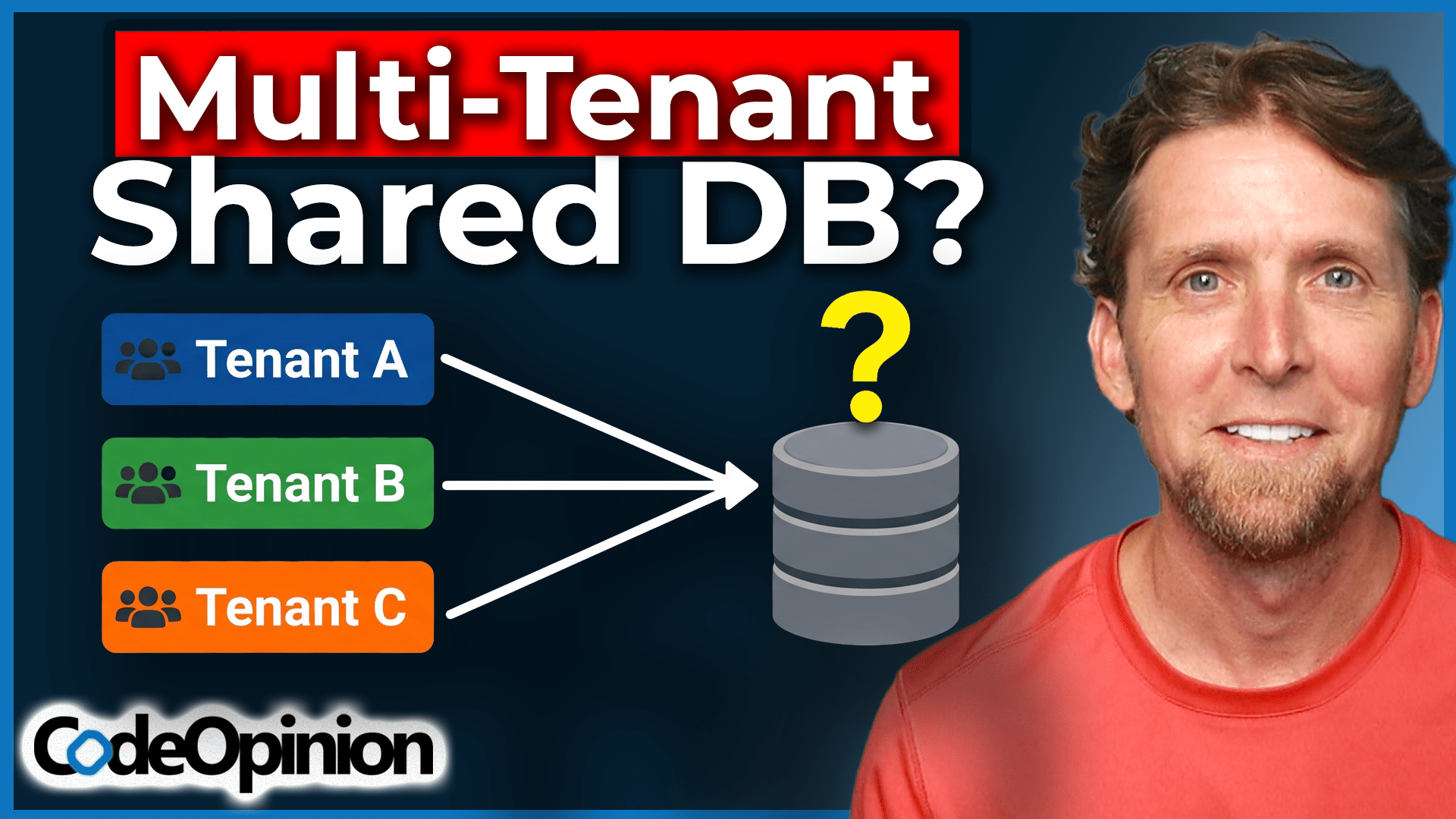
Multi-Tenancy Isn’t About Databases
codeopinion.com Issue #496
A solid architecture-first take. If you still frame tenancy as a schema-per-customer decision, this is worth your time.
-

What Happens After Approval: Decoupling Side Effects with the Observer Pattern
gbemmiey.medium.com Issue #489
Solid design discussion on keeping approvals from turning into side-effect spaghetti.
domain-driven design .NET from the DotNetNews archive, curated for .NET developers who already ship production code. This is a reading list pulled from daily issues, not a substitute for the official docs on Domain-Driven Design in .NET.
Use Start here for the editorial shortlist, then browse Latest or the full archive when you need more depth. Coverage leans toward domain-driven design .NET, DDD C#, aggregates .NET. Recent pieces worth opening: “Event Sourcing vs CRUD Applications: A Practical Comparison” and “A Modular Vertical Slice Architecture Starter Kit for Real-World .NET”.
Every item links out to the original publisher and back to the DotNetNews issue where it ran.
Latest
Newest Domain-Driven Design from the archive
- Event Sourcing vs CRUD Applications: A Practical Comparison
c-sharpcorner.com Issue #499
-
 How does your domain know your user?
medium.com Issue #498
- Domain-Driven Design (DDD)
medium.com Issue #497
- Multi-Tenancy Isn’t About Databases
codeopinion.com Issue #496
-
 Designing AI-Oriented Domain Models in ASP.NET Core Applications
c-sharpcorner.com Issue #488
Archive
Page 1 of 4
Newest first
-
Event Sourcing vs CRUD Applications: A Practical Comparison
c-sharpcorner.com Issue #499
Compare Event Sourcing vs CRUD: understand their core differences, real-world use cases, pros, cons, and when to choose each for your application.
-
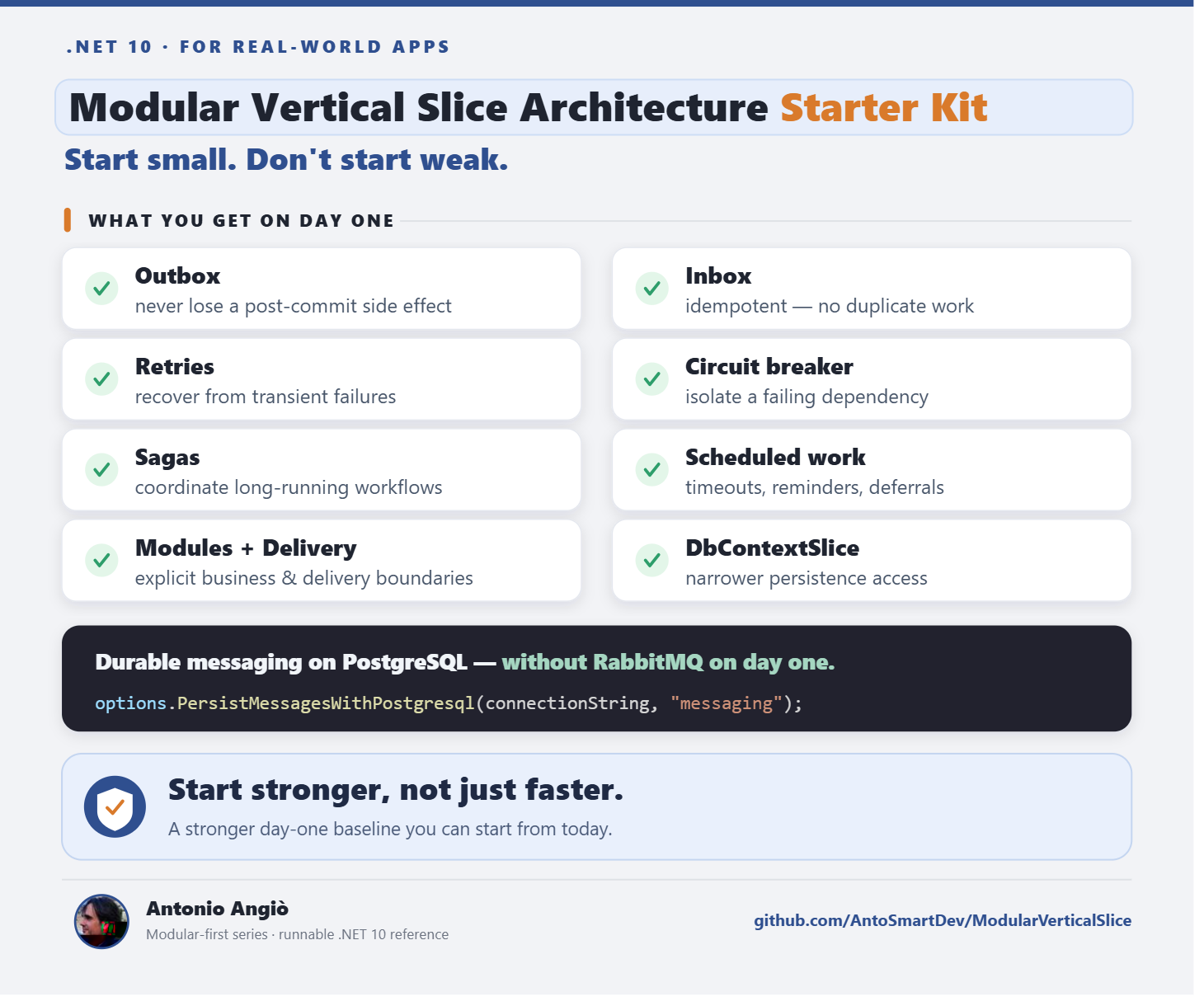
A Modular Vertical Slice Architecture Starter Kit for Real-World .NET
medium.com Issue #498
Stronger boundaries, durable messaging, and serious reliability patterns without day-one distributed overhead.
-
How does your domain know your user?
medium.com Issue #498
Almost every business application needs to answer a question that sounds simple: who is the current user? But “user” isn’t one thing…
-
Domain-Driven Design (DDD)
medium.com Issue #497
Prerequisite Note: While this tutorial is implemented using .NET and the Clean Architecture, the DDD concepts explored here are universal…
-
Multi-Tenancy Isn’t About Databases
codeopinion.com Issue #496
You start off with what seems like the obvious solution to a multi-tenant SaaS application. We have tenant A. We have tenant B. We have one application and one database. Within that database, for ever...
-
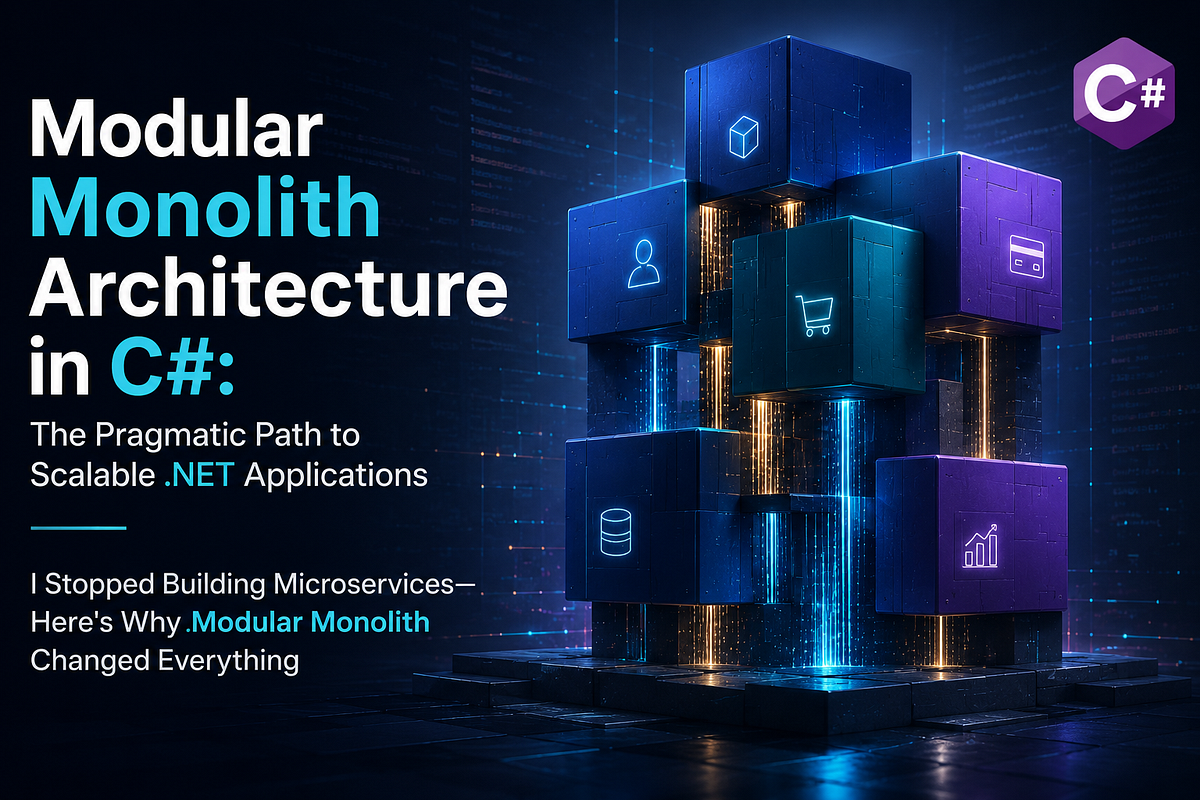
Modular Monolith Architecture in C#: The Pragmatic Path to Scalable .NET Applications
medium.com Issue #494
I Stopped Building Microservices — Here’s Why Modular Monolith Changed Everything
-
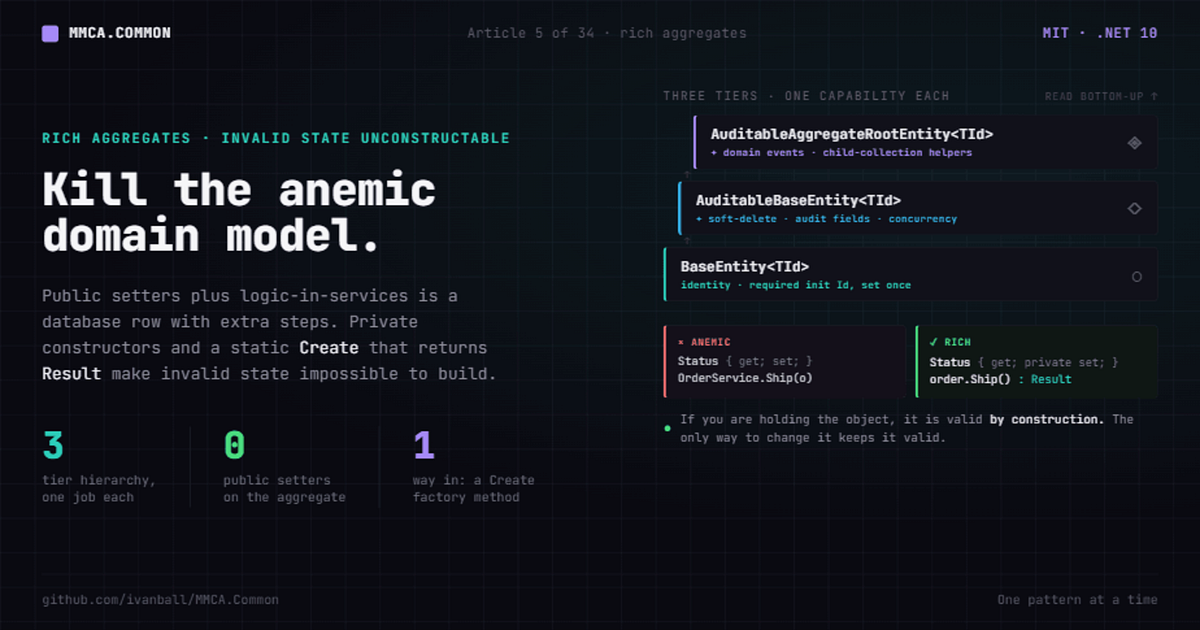
Kill the anemic domain model: rich aggregates with factory methods that return Result
medium.com Issue #490
Public setters plus logic-in-services is not a domain model, it is a database row with extra steps.
-
What Happens After Approval: Decoupling Side Effects with the Observer Pattern
gbemmiey.medium.com Issue #489
Part 4 of 4: Emails, audit trails, one event handler that catches dozens of event types it’s never heard of, transaction semantics, and…
-
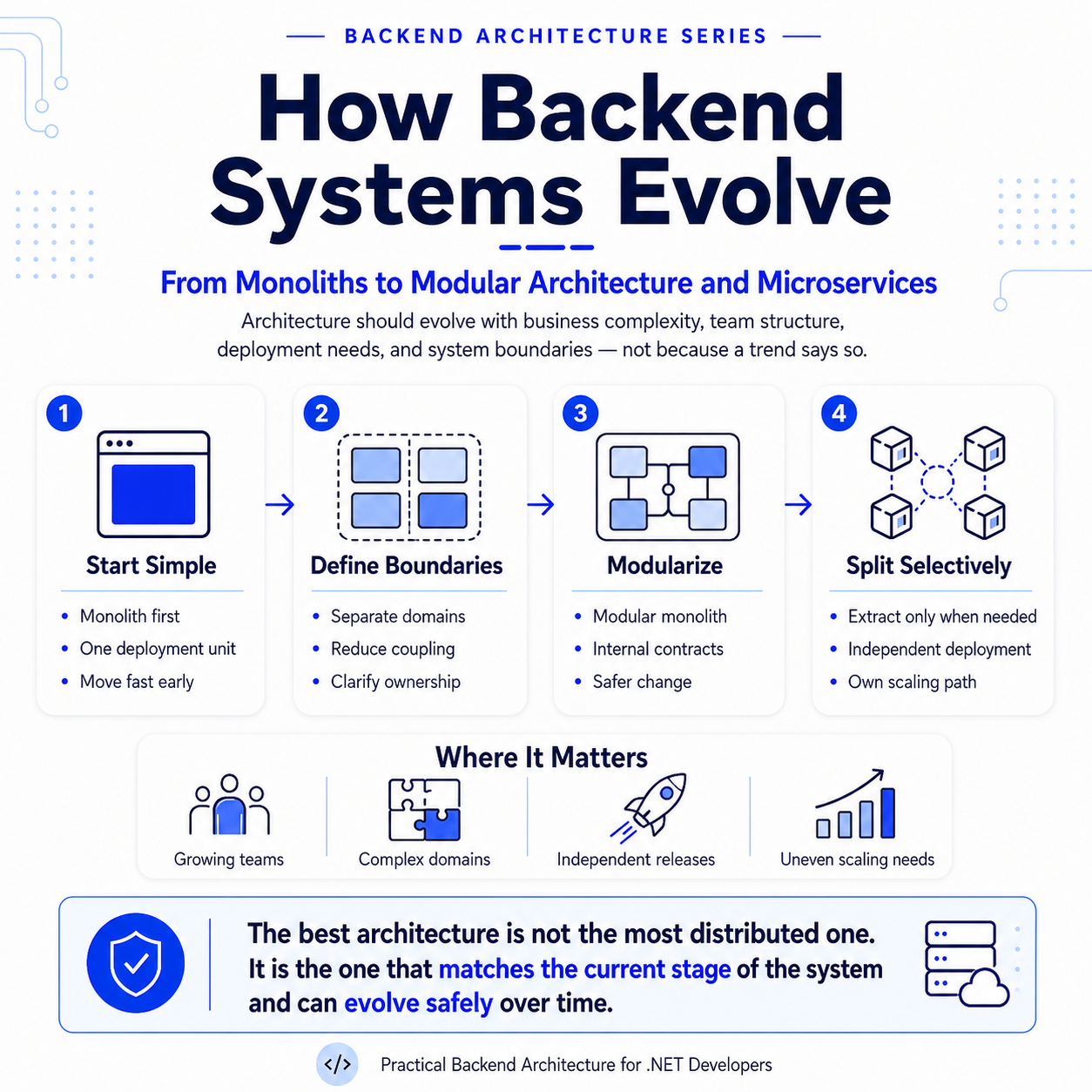
How Backend Systems Evolve: From Monoliths to Modular Architecture and Microservices
medium.com Issue #488
From monolith to modular monolith to microservices, and how to know when the architecture should change
-
Designing AI-Oriented Domain Models in ASP.NET Core Applications
c-sharpcorner.com Issue #488
Design AI-oriented domain models in ASP.NET Core for intelligent apps. Integrate AI concepts for better scalability and business alignment.
-
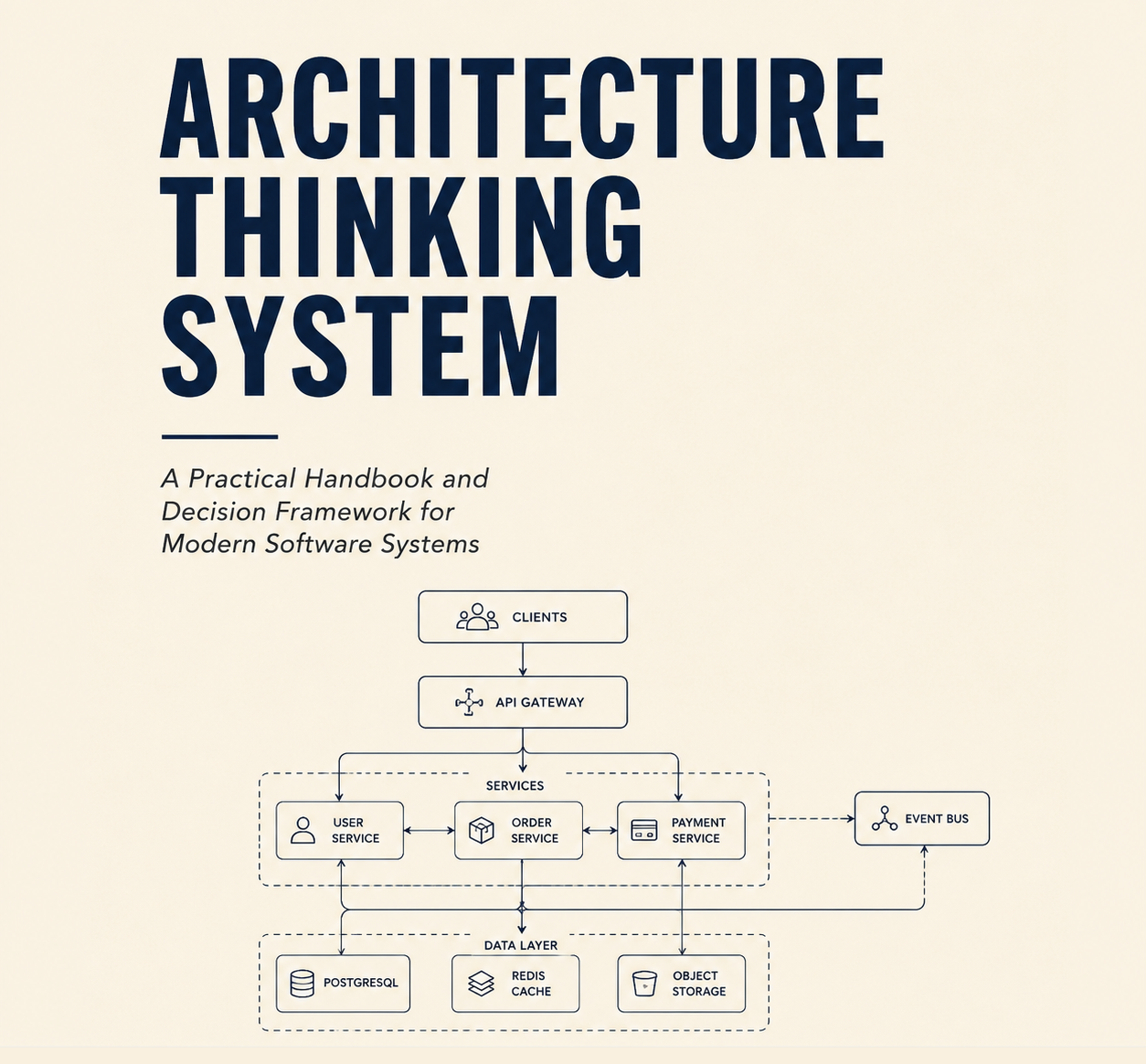
How .NET Developers Transition Into Software Architecture (Without Rewriting Everything)
medium.com Issue #477
Most .NET developers never really transition into software architecture.
-
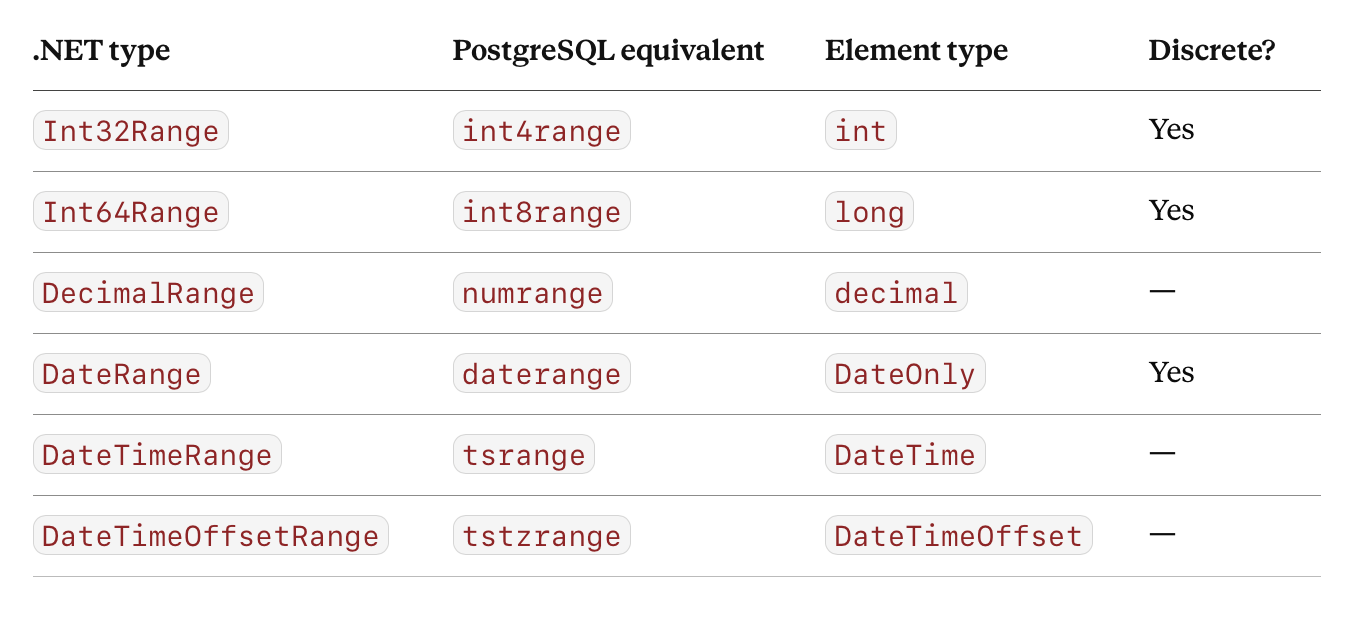
The Interval Is the Thing: Modelling Range Types as First-Class Domain Objects in .NET
medium.com Issue #476
A complete solution: expressive range types in your domain layer, full PostgreSQL translation in your data layer — no compromises at…
-

ASP.NET Core 10 Web API CRUD with EF Core - Complete .NET 10 Tutorial
codewithmukesh.com Issue #473
Build a production-ready .NET 10 Web API with EF Core 10 and PostgreSQL. CRUD operations, DDD, Minimal APIs, Scalar, code-first migrations, and best practices.
-
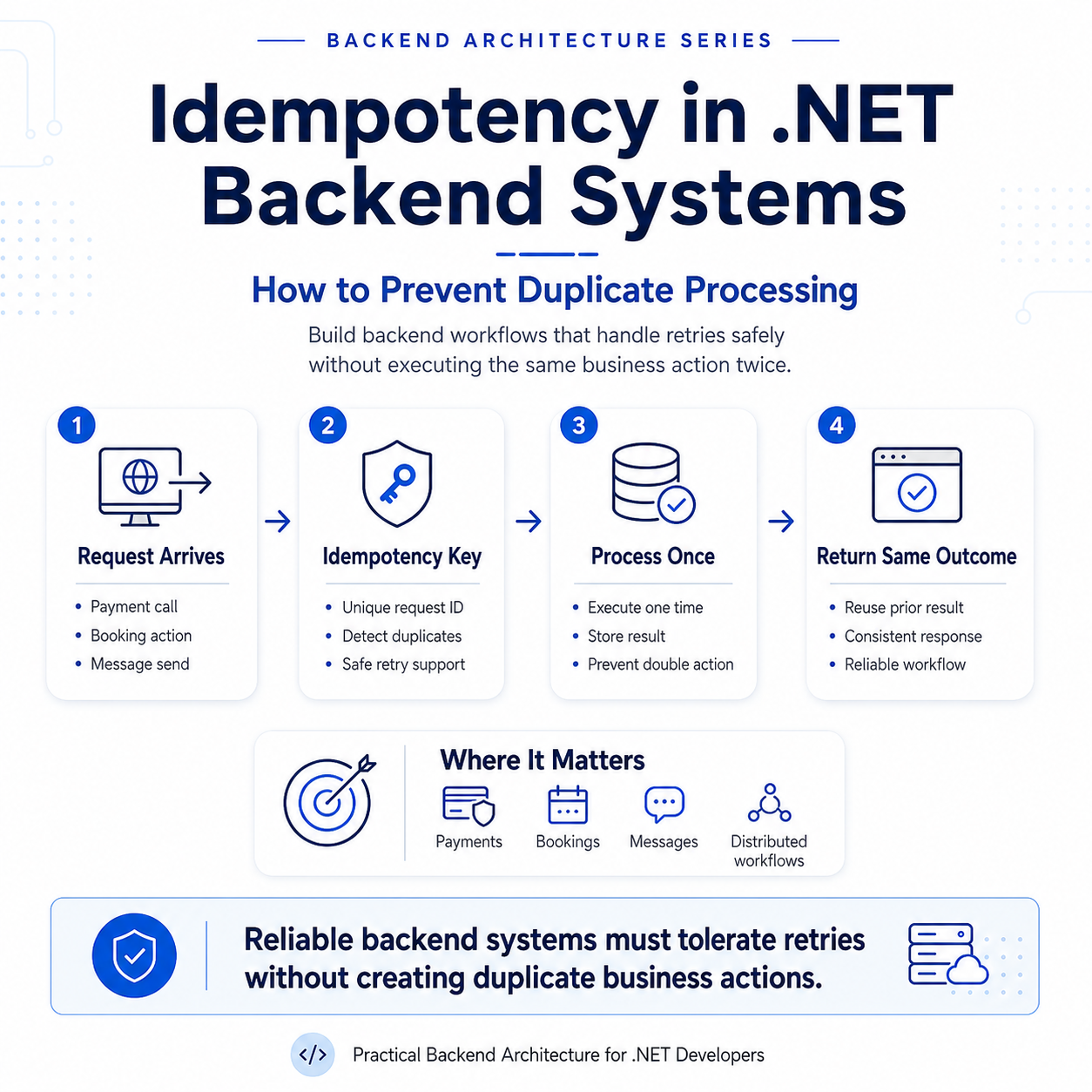
Idempotency in .NET Backend Systems: How to Prevent Duplicate Processing
medium.com Issue #466
In Part 1, I wrote about boundaries. In Part 2, I wrote about aggregates and invariants. In Part 3, I wrote about domain events. In Part 4…
-
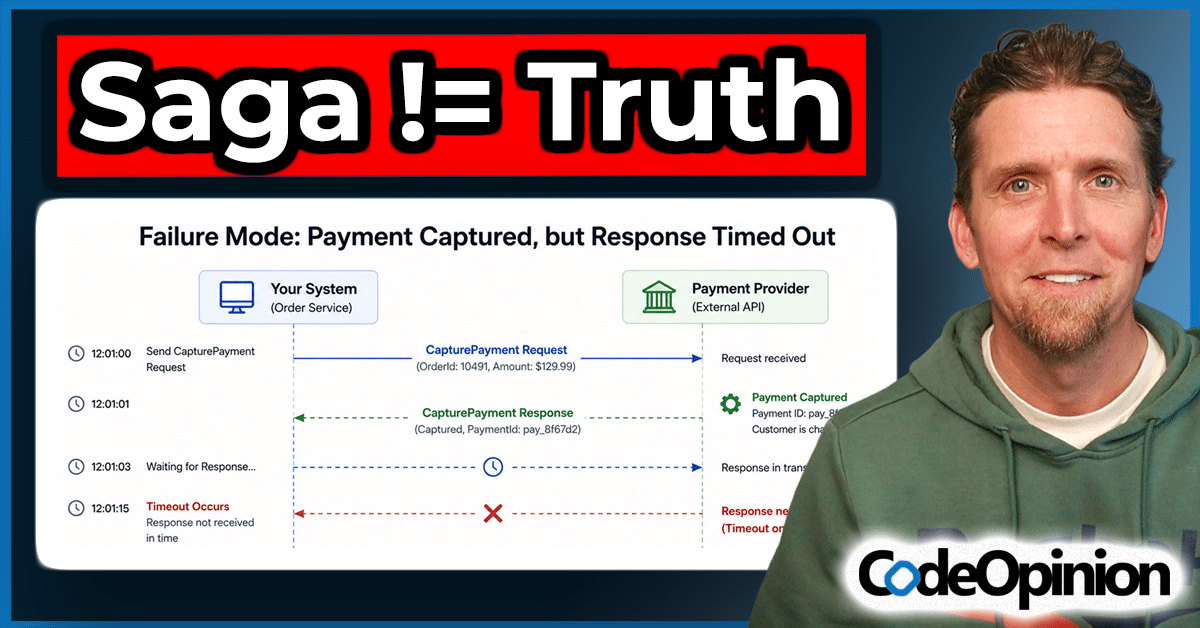
Why Sagas Feel Broken
codeopinion.com Issue #457
So, you built an elaborate system with commands, queues, an event-driven architecture, retries, timeouts, and, most importantly, compensating actions all handled within sagas. But do you really? Becau...
-
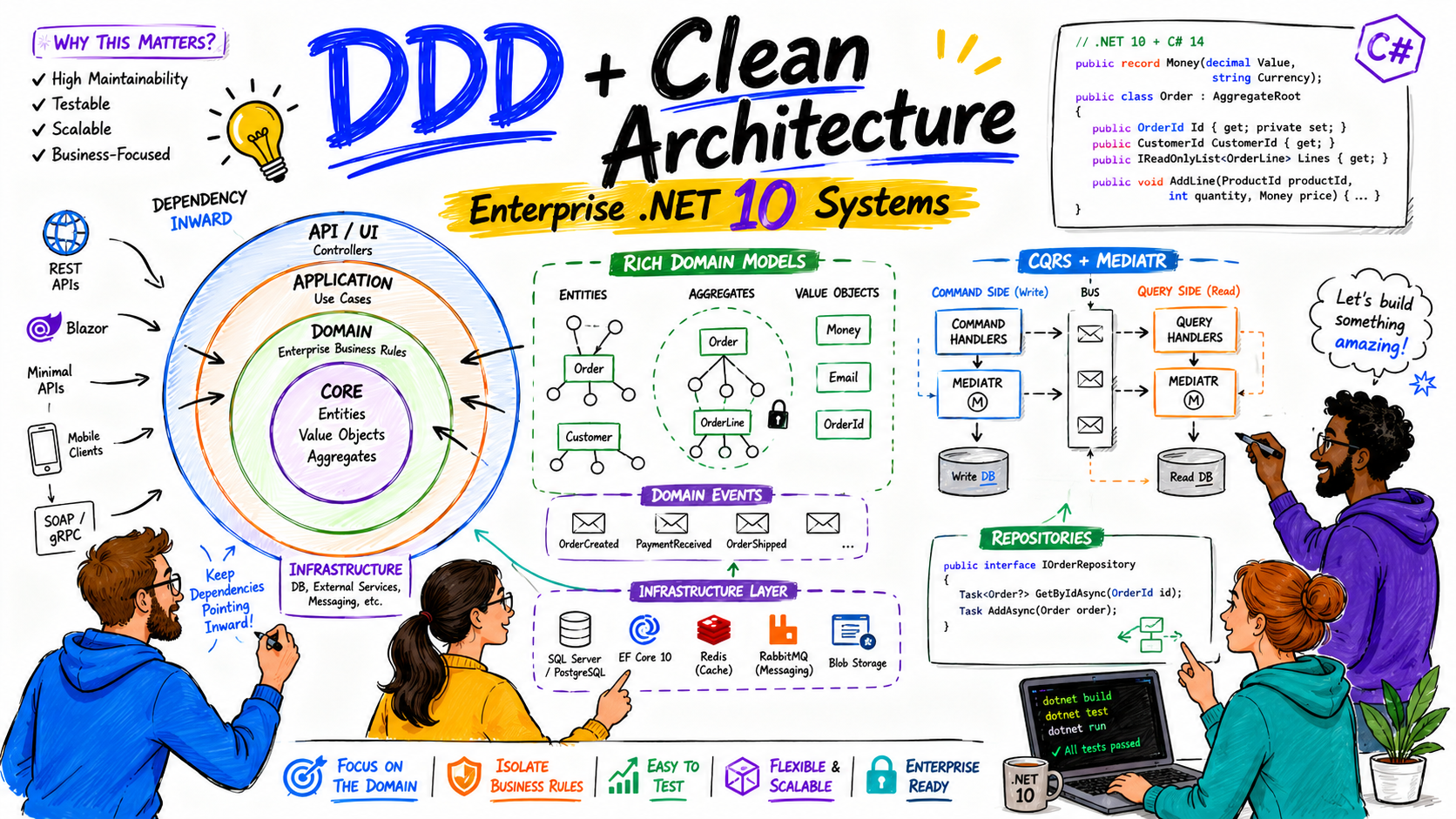
How To Use Domain-Driven Design In Clean Architecture
medium.com Issue #455
A Practical Guide for .NET 10 Developers Building Enterprise-Grade Systems
-
Implementing strongly-typed IDs in .NET for safer domain models
blog.elmah.io Issue #395
As developers, we know that user requests can be unpredictable. When they request data, it is either successfully returned or not found. However, a "not found" result usually happens in two ...
-

Repository Pattern in .NET Explained with a Clear and Practical Example
c-sharpcorner.com Issue #395
Unlock efficient data access in .NET! This guide provides a clear, practical example of the Repository Pattern, boosting maintainability and testability.
-
Understanding Domain-Driven Design (DDD) in .NET
medium.com Issue #394
Domain-Driven Design is a domain-centric approach that treats the software development process not merely as a coding activity, but as a…
-
EF Core LINQ, Linux support, and API resilience
DotNetNews Issue #384
A varied .NET roundup covering LINQ-to-SQL in EF Core, .NET 10 on Linux, ASP.NET Core performance and resilience, plus AI and security topics.
-
Logging, EF Core, and .NET 10 upgrade reasons
DotNetNews Issue #379
A varied .NET roundup with Serilog logging, EF Core Fluent API, .NET 10 upgrade reasons, MAUI, SignalR, and Azure DevOps updates.
-
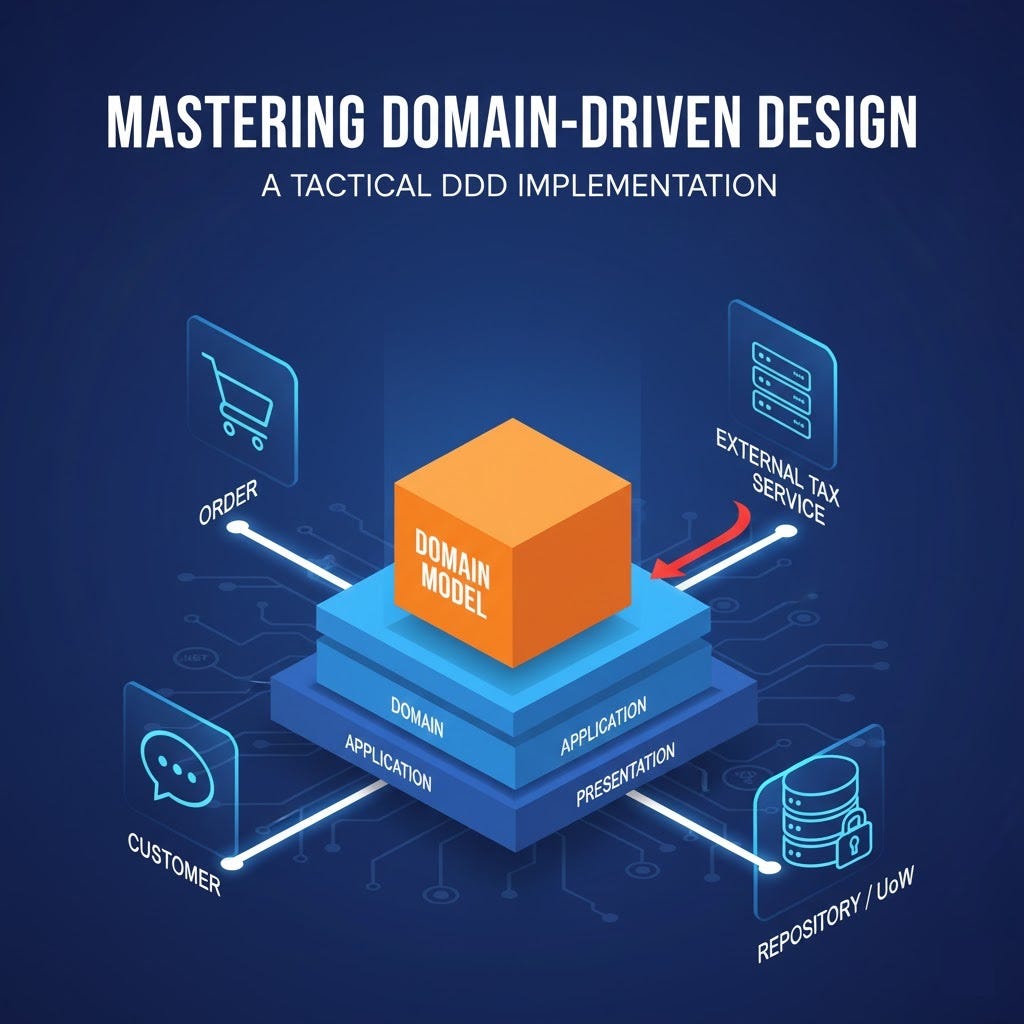
Mastering Domain-Driven Design: A Tactical DDD Implementation
medium.com Issue #370
Mastering Complexity in .NET 10: A Step-by-Step Guide to Domain-Driven Design. Move beyond basic CRUD and learn to architect a scalable…
-

8 “Finally Maintainable” Steps to Build a CRUD REST API with Clean Architecture + DDD in .NET
medium.com Issue #369
If You want the full source code Click :Here
-

Digital Essentialism in .NET: How Verdict is Redefining the Result Pattern
baryodev.medium.com Issue #360
In the world of high-performance .NET development, the “Result Pattern” has officially arrived. It’s the preferred way to handle domain…
-
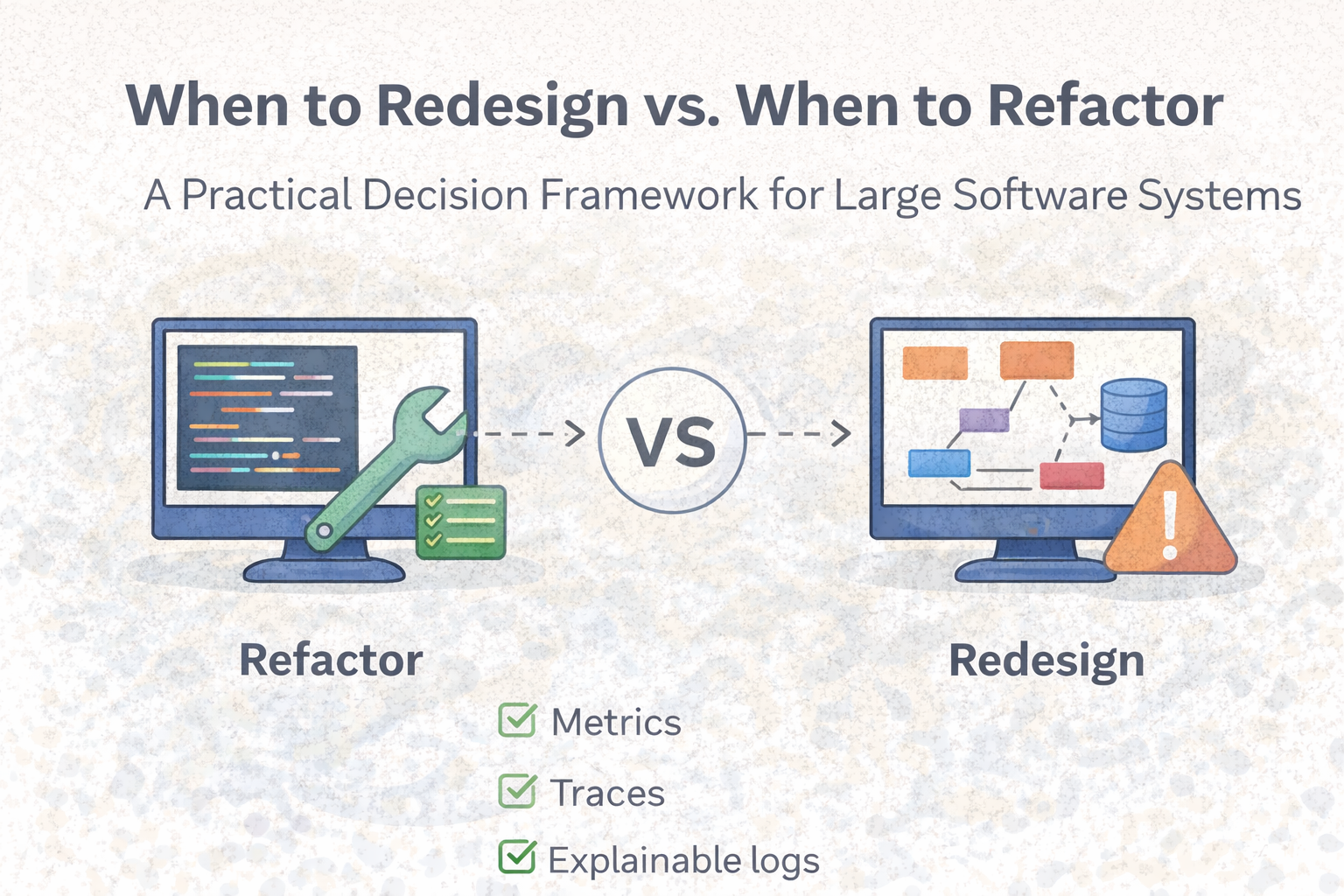
When to Redesign vs. When to Refactor
medium.com Issue #360
A Practical Decision Framework for Large Software Systems