ASP.NET Core AI Apps, Semantic Kernel, WPF
Covers AI-assisted query tuning, Semantic Kernel assistants, Blazor and MongoDB APIs, WPF animation, SOLID design, and SQL Server UUID v7 limits.
Jasen's top three picks
- 1 How to Implement AI-Assisted Database Query Optimization in ASP.NET Core
c-sharpcorner.com
Interesting angle on performance tuning: less about magic AI, more about surfacing database bottlenecks and guiding better fixes in ASP.NET Core apps.
- 2 SOLID Principles in C# – Part 2: The Open/Closed Principle (OCP)
c-sharpcorner.com
A straightforward OCP refresher. Good for newer developers who need examples of extension without rewriting stable code.
- 3 C# 15 Union Types: A Cleaner Way to Model “One of These” Values
medium.com
Union types would be a notable language shift if they land as described. Worth reading with healthy skepticism until the feature is finalized.
Editor's note
I put together a pretty mixed issue today, even if AI-heavy app building clearly dominates the stack. The SQL Server UUID v7 deep dive stood out because it tackles a practical limitation people can miss, and the WPF storyboard post is the kind of focused desktop tip I always like to include alongside bigger architectural pieces. There’s also a useful pair of SOLID articles here if you want some design fundamentals in between the AI and API work.
Today's articles

How to Implement AI-Assisted Database Query Optimization in ASP.NET Core
c-sharpcorner.com
Boost ASP.NET Core app performance with AI-assisted database query optimization. Learn to identify bottlenecks, get recommendations, and improve productivity.
Topics: ASP.NET Core OpenAI Performance
Read article
SOLID Principles in C# – Part 2: The Open/Closed Principle (OCP)
c-sharpcorner.com
Learn the Open/Closed Principle (OCP) in C#: extend functionality without modifying existing code. Master OCP for robust, scalable software.
Topics: C# Design Patterns Solid Principles
Read article
C# 15 Union Types: A Cleaner Way to Model “One of These” Values
medium.com
C# 15 is introducing “union types”, for modeling values that can be exactly one of several known types. Now, you do not have to rely on…
Topics: C# Design Patterns .NET 10
Read articleBuilding Multi-Tenant AI Applications in ASP.NET Core
c-sharpcorner.com
Build secure, scalable multi-tenant AI apps in ASP.NET Core with Azure OpenAI, Semantic Kernel, and Azure AI Search.
Topics: ASP.NET Core Azure Semantic Kernel
Read articleHow to Build an Internal Knowledge Assistant Using Azure AI Search and Blazor
c-sharpcorner.com
Build an internal knowledge assistant with Azure AI Search & Blazor for efficient, AI-powered information retrieval and conversational access.
Read article
Building AI-Powered SQL Assistants with Semantic Kernel and .NET
c-sharpcorner.com
Build AI-powered SQL assistants with Semantic Kernel and .NET to unlock data insights. Empower users with natural language queries and secure data access.
Topics: OpenAI Semantic Kernel SQL Server
Read article
Manually triggering a WPF animation
blog.jermdavis.dev
I have a complicated relationship with WPF. When you know what you're doing, it's great for building desktop apps. It's much easier to handle scenarios like apps getting used across varying DPIs, or d...
Topics: WPF
Read articleSOLID Principles in C# – Part 3: The Liskov Substitution Principle (LSP)
c-sharpcorner.com
Master Liskov Substitution Principle (LSP) in C#. Ensure subclasses honor base class contracts for predictable polymorphism.
Topics: C# Design Patterns Solid Principles
Read article
Why I Switched from Swagger UI to Scalar in .NET
serkanozbeykurucu.medium.com
Swagger UI was part of almost every .NET API I built for years. Then .NET 9 removed it from the default Web API template, and many…
Topics: .NET 9 REST API Web API
Read article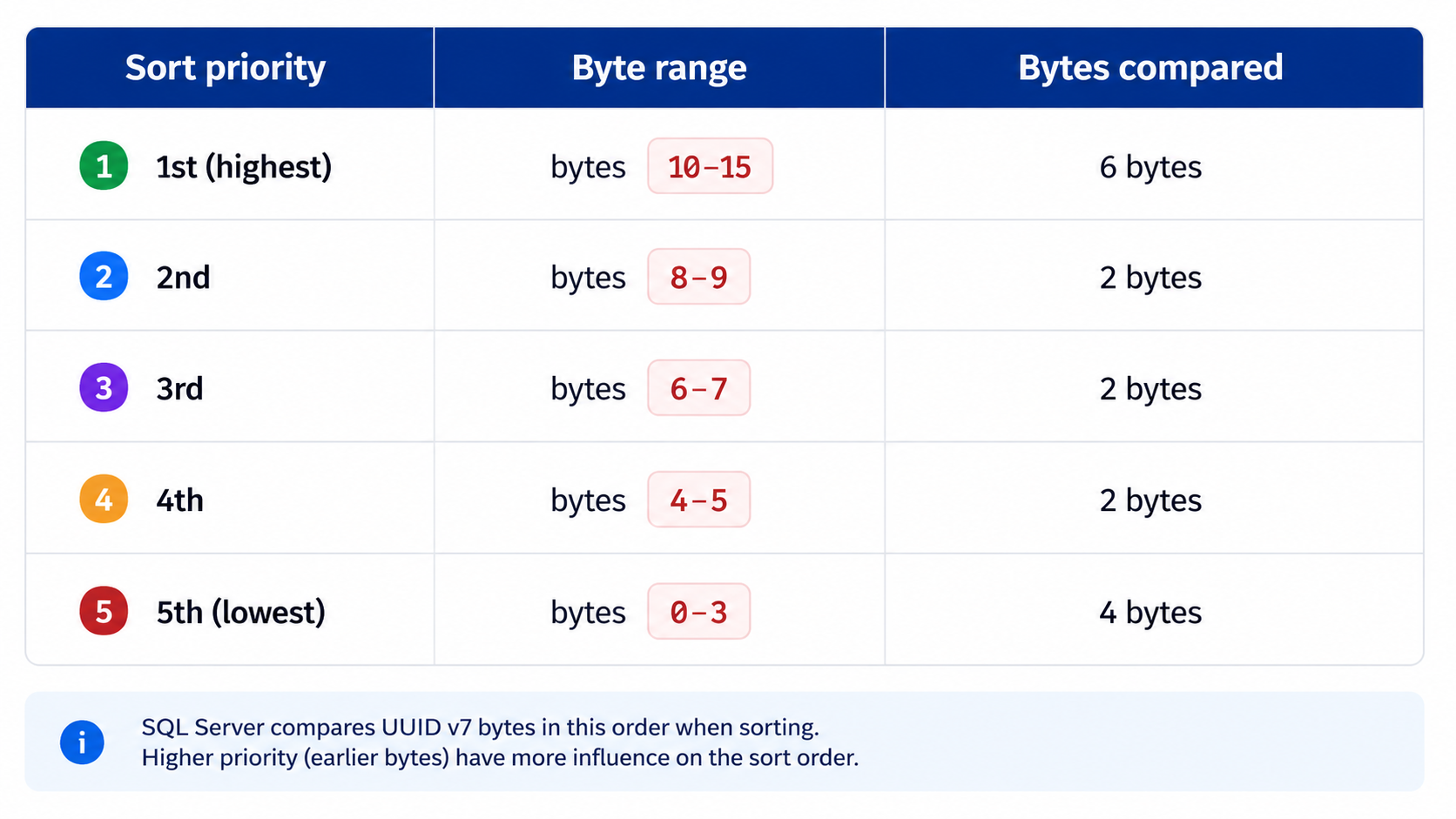
UUID v7 in SQL Server: Can You Really Use It? (The Limitation Nobody Tells You About) Deep Dive
medium.com
By Pankaj Ikhar — Solution Architect | Mentor | Coach #LearnWithPankaj | Follow for Career Growth & Interview Preparation
Topics: Performance SQL Server
Read articleBuilding AI-Powered API Documentation Assistants with .NET
c-sharpcorner.com
Build AI-powered API documentation assistants with .NET, Azure AI Search, and Azure OpenAI for enhanced developer productivity and accessibility.
Read article
Building AI-Powered DevOps Assistants for Internal Engineering Teams
c-sharpcorner.com
Build AI-powered DevOps assistants with ASP.NET Core, Azure OpenAI, and Semantic Kernel to boost engineering productivity and accelerate software delivery.
Topics: ASP.NET Core Azure DevOps Semantic Kernel
Read articleHow to Build AI-Powered Data Analysts Using Semantic Kernel and .NET
c-sharpcorner.com
Build AI-powered data analysts with Semantic Kernel and .NET. Understand natural language, query data, and generate actionable business insights.
Topics: OpenAI Semantic Kernel SQL Server
Read article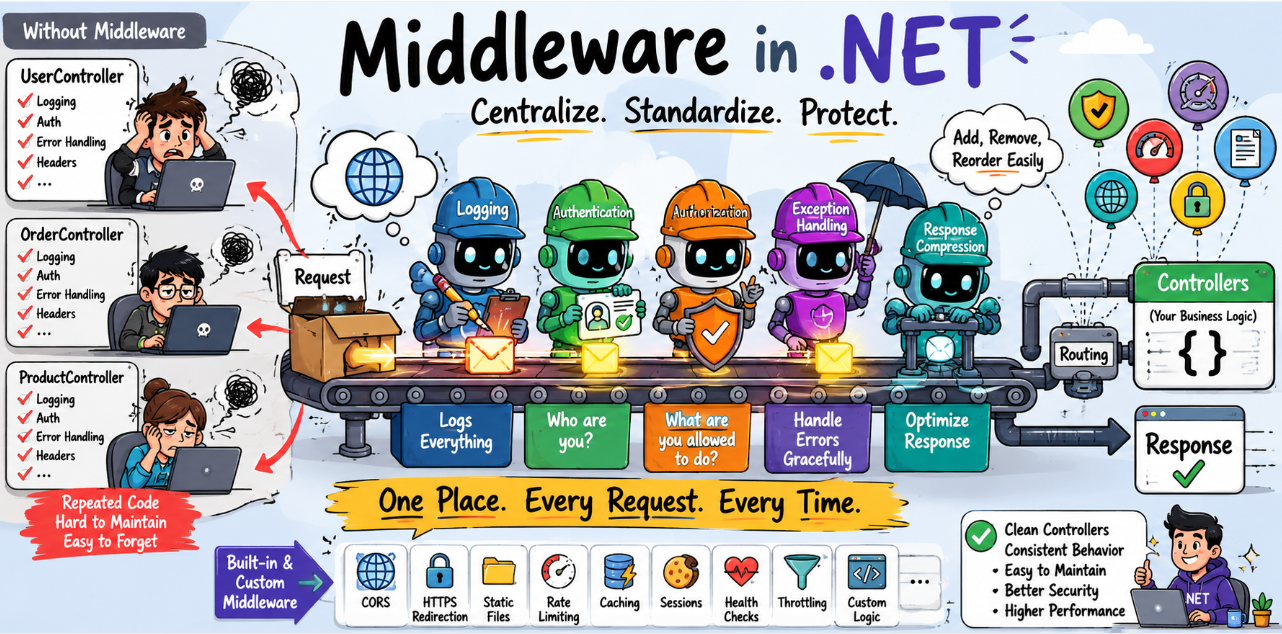
Middleware: What It Is and Why It Matters
ngcheehou.medium.com
If I had to summarize why we need middleware in .NET development in one sentence, I would say:
Topics: ASP.NET Core .NET Core
Read articleBuilding AI-Powered Engineering Portals with ASP.NET Core and Blazor
c-sharpcorner.com
Build AI-powered engineering portals with ASP.NET Core & Blazor. Centralize knowledge, boost productivity, and accelerate software delivery.
Topics: ASP.NET Core Blazor OpenAI
Read article
How to Build Private Enterprise ChatGPT Solutions Using .NET
c-sharpcorner.com
Build secure, private Enterprise ChatGPT solutions with .NET, Azure OpenAI, Semantic Kernel, and Azure AI Search for internal knowledge access.
Topics: Azure OpenAI Semantic Kernel
Read article
Your AI Agents Are Running Without a Safety Net — SkillMesh Is the Fix
medium.com
I’ve been around the block a few times. I started coding when the internet was a fledgling idea and dial-up tones were the soundtrack of…
Read article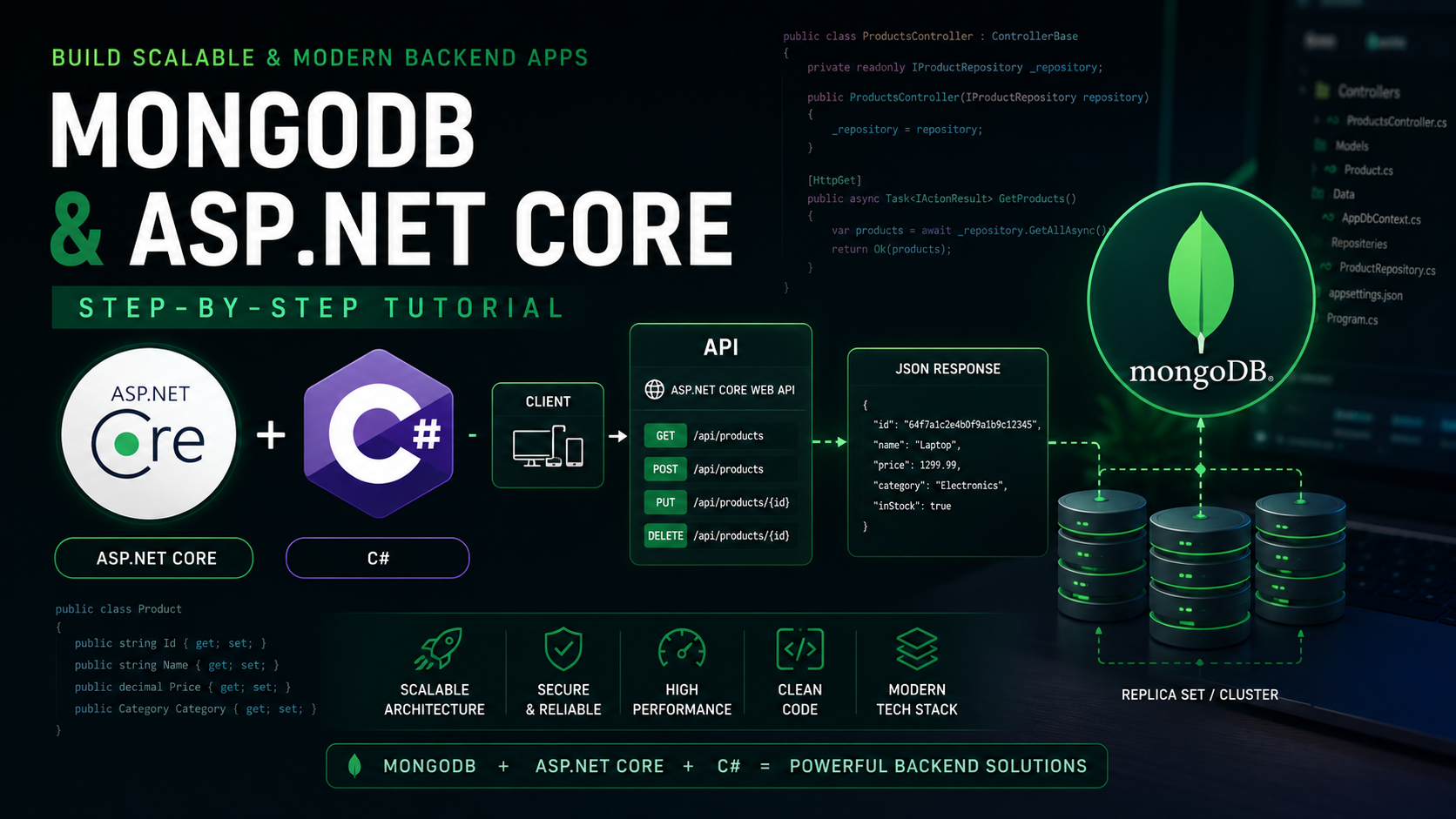
ASP.NET Core + MongoDB: Building Modern APIs
alifiyakapasi07.medium.com
When building modern applications, choosing the right database is an important decision. While relational databases like SQL Server remain…
Topics: ASP.NET Core MongoDB Web API
Read articleUsing GraphRAG with Azure AI Search and .NET Applications
c-sharpcorner.com
Unlock enterprise AI with GraphRAG, Azure AI Search, and .NET. Enhance LLMs with knowledge graphs for deeper context and reasoning.
Topics: ASP.NET Core Azure OpenAI
Read article