ASP.NET Core APIs, performance, and testing
Issue 260 covers ASP.NET Core response patterns, EF Core auditing, minimal APIs, C# performance, testing, and AI-driven .NET experiments.
Jasen's top three picks
- 1 474: Apple Intelligence for C# and .NET
mergeconflict.fm
Frank’s Apple Intelligence work is the most unusual item here, and it’s a fun look at where .NET can reach beyond the usual server-side lanes.
- 2 Mastering Unified API Responses in ASP.NET Core
medium.com
Unified API responses is a small design choice that pays off quickly in consistency, client handling, and cleaner controller code.
- 3 What are indexers in C#?
c-sharpcorner.com
Indexers are one of those C# features people gloss over, so a plain-English refresher is genuinely useful.
Editor's note
I pulled a deliberately mixed lineup again: API design, performance work, architecture, testing, and a few AI-adjacent pieces. The unified response and EF Core audit posts are especially practical, while the Span and Dictionary articles reward anyone chasing real-world speedups.
Today's articles

474: Apple Intelligence for C# and .NET
mergeconflict.fm
Frank brings apple intelligence APIs to C#! We discuss! https://github.com/praeclarum/CrossIntelligence/ Follow Us Frank: Twitter, Blog, GitHub James: Twitter, Blog, GitHub Merge Conflict: Twitter, Fa...
Read article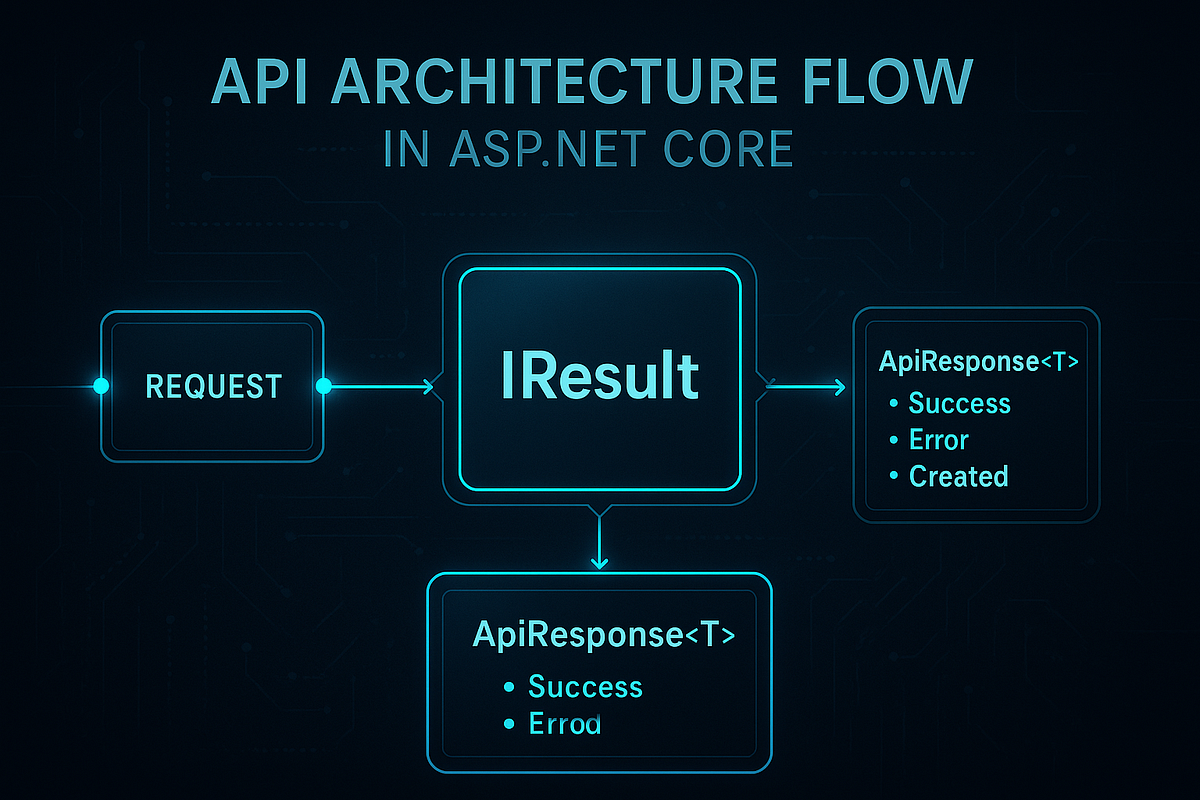
Mastering Unified API Responses in ASP.NET Core
medium.com
How to Wrap Success, Errors, and Created Results Like a Pro
Topics: ASP.NET Core Web API
Read article
What are indexers in C#?
c-sharpcorner.com
Exploring indexers in C# is a powerful feature that lets objects behave like arrays. We'll explain the basics in simple language, compare them to properties, cover multiple examples including overload...
Topics: C#
Read article
How Clean Architecture Differs From Layered
medium.com
In a recent post I showed the way I structure my apps, only three layers — API, Core (business logic), and Infrastructure (handling…
Topics: Clean Architecture .NET Core
Read article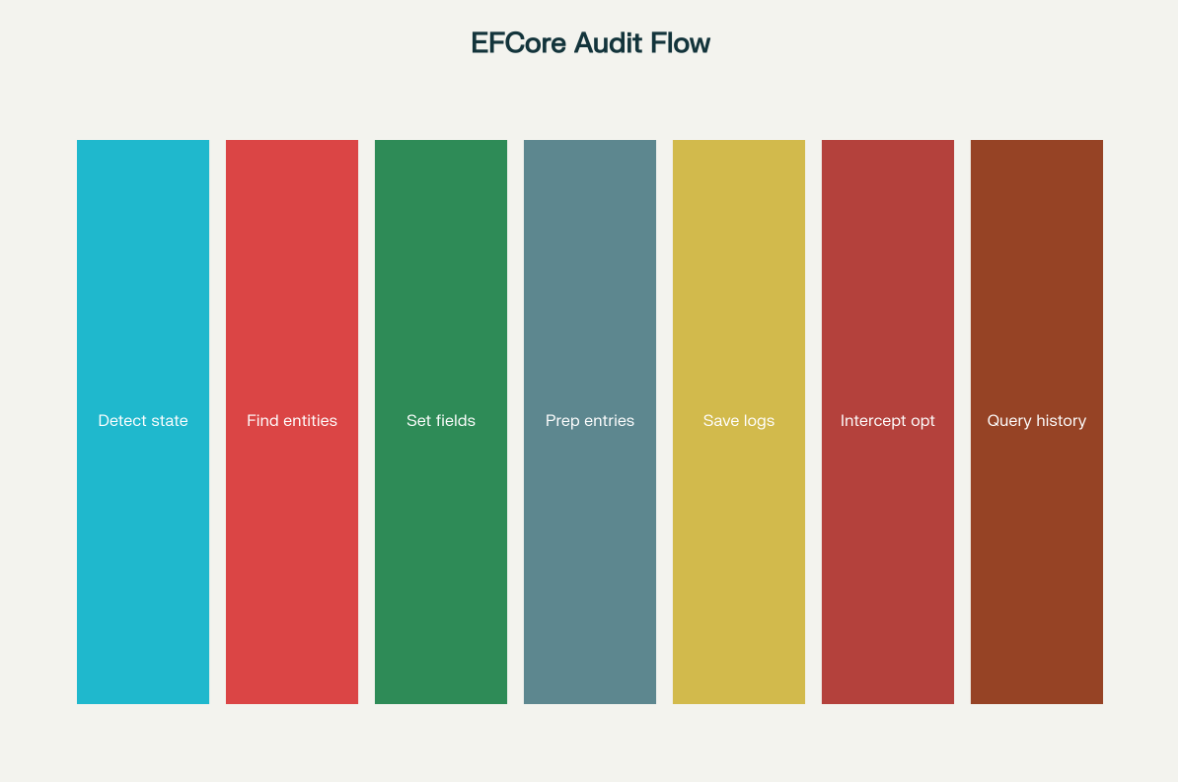
How To Track Entity Changes With EF Core | Audit Logging
medium.com
How To
Topics: EF Core
Read articleHow does C# differ from C or .NET?
c-sharpcorner.com
A clear and concise guide explaining how C#, C, and .NET differ — covering their roles, syntax, usage, and ecosystem. Perfect for beginners and professionals looking to understand where each technolog...
Read articleSelenium WebDriver Overview
c-sharpcorner.com
Selenium WebDriver is a powerful tool for automating web browser interactions. It enables cross-browser testing, supports multiple languages, and is essential for robust and scalable test automation f...
Topics: Unit Testing
Read articleHow to Write Tests in C# in 5 Steps & TDD Explained
c-sharpcorner.com
Test-Driven Development (TDD) is a software approach where tests are written before code. It ensures clean, maintainable code by following a red-green-refactor cycle and improves software quality thro...
Topics: Test-Driven Development Unit Testing
Read article

3 Ways to Create Middleware in ASP.NET Core (With Real Examples)
medium.com
Hi, I’m Ali. I’ve been working as a software developer with .NET Core for about 3 years. One of the most important things I’ve learned is… Continue reading on DotnetAsync »
Topics: ASP.NET Core Minimal APIs
Read article
Your First C# Program: Writing Hello World
medium.com
Writing your first program is an exciting milestone in any programming journey. In this guide, we’ll walk through creating the classic…
Topics: C#
Read articleWhat are Minimal APIs in .NET, and When Should I Use Them?
c-sharpcorner.com
Explore the concept of Minimal APIs in .NET. Learn what they are, how they differ from traditional Web APIs, when to use them, and how to implement them with real code examples in .NET 6/7/8.
Topics: ASP.NET Core Minimal APIs
Read articleDo You Need Coding Skills to Use Langflow?
c-sharpcorner.com
Wondering if you need to know programming to use Langflow? Discover how Langflow enables no-code and low-code AI app development with drag-and-drop simplicity.
Read article
5 .NET Tips That Quietly Separate Experts From Everyone Else
blog.stackademic.com
Master these, and your code will start feeling as fast and clean as it looks. Continue reading on Stackademic »
Topics: C# Performance
Read article
Semantic Search with .NET Core and AI: Build Your Smart API from Scratch
medium.com
Learn how to build a smart API with .NET Core, SQLite, and OpenAI to perform semantic search using embeddings. A practical guide for…
Topics: .NET Aspire OpenAI
Read article
Jeff Fritz on .NET Aspire and CoPilot Agents
jesseliberty.com
Jeff Fritz (Microsoft) joins me to talk about .NET Aspire, CoPilot Agents and Vibe programming. This is a show not to miss; his enthusiasm is catching and his knowledge is astonishing. Jesse Liberty h...
Topics: Clean Architecture Domain-Driven Design
Read article
Real-World Software Architecture in C#: Chapter 11 — Myths and Misinterpretations in .NET
blog.stackademic.com
This article series was born from frustration — and experience. Continue reading on Stackademic »
Topics: .NET 8 Performance
Read article
Span Isn’t Just a Buzzword — It’s How Microsoft Cuts Allocations in .NET 8+
blog.devgenius.io
💡 Sick of shallow Span<T> blogs slicing strings and calling it performance? This is the real deal — practical, production-grade usage… Continue reading on Dev Genius »
Topics: C# Performance
Read articleStop Looping: Use Dictionary<Guid, T> for Fast Entity Access in .NET
c-sharpcorner.com
This post explores a common performance issue in .NET, using collections for ID-based lookups, and presents a cleaner, faster alternative using Dictionary.
Topics: .NET Core Performance
Read article
Belitsoft on ZLinq: Modern LINQ Performance for Legacy .NET Apps
belitsoft.com
Eliminate heap allocations while keeping LINQ’s syntax — ideal for high-frequency trading, real-time analytics, and legacy .NET upgrades.
Topics: C# Performance
Read article
Memory-Efficient String Handling in .NET: StringBuilder vs Concatenation
malshikay.medium.com
Efficient string handling in C#
Topics: C# Performance
Read article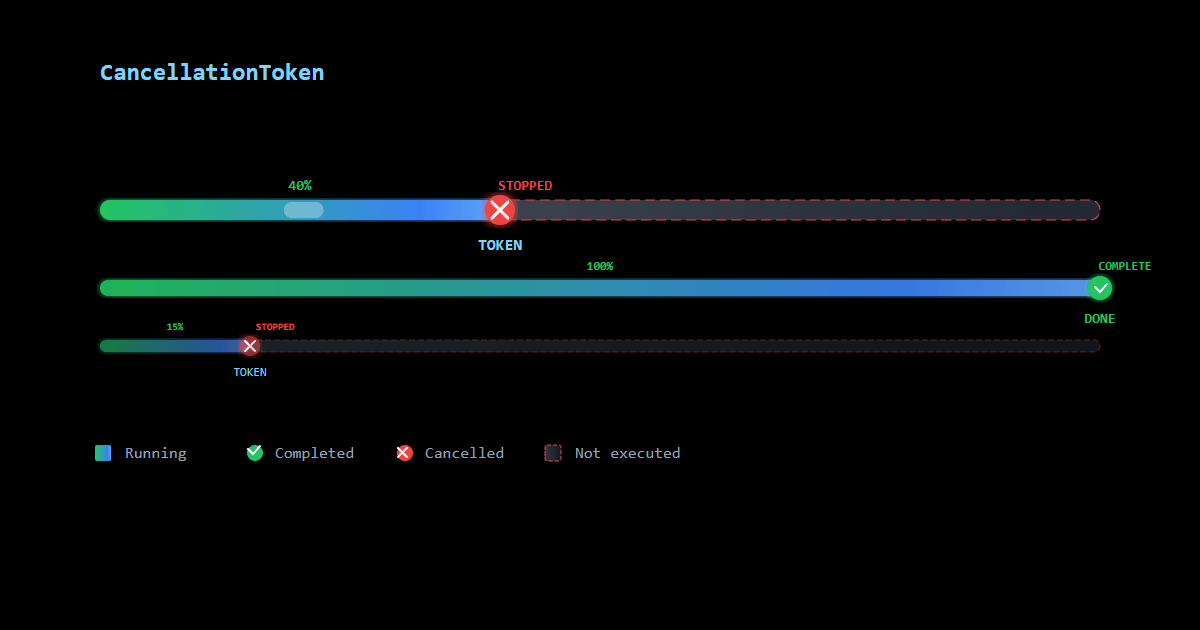
Mastering Cancellation Tokens in .NET
blog.stackademic.com
Why your async code needs cancellation and how to get it right from the start. Continue reading on Stackademic »
Topics: C# Performance
Read article
InfluxDB and C#
nodogmablog.bryanhogan.net
Download full source code. I recently started playing with InfluxDB, and as with many of these things, it took a little longer to get going than expected. So, to save the next person some time, here ...
Topics: .NET Core Performance
Read article